
The Controversial 1978 Argentina World Cup: A Look Back at Football’s Most Disputed Tournament
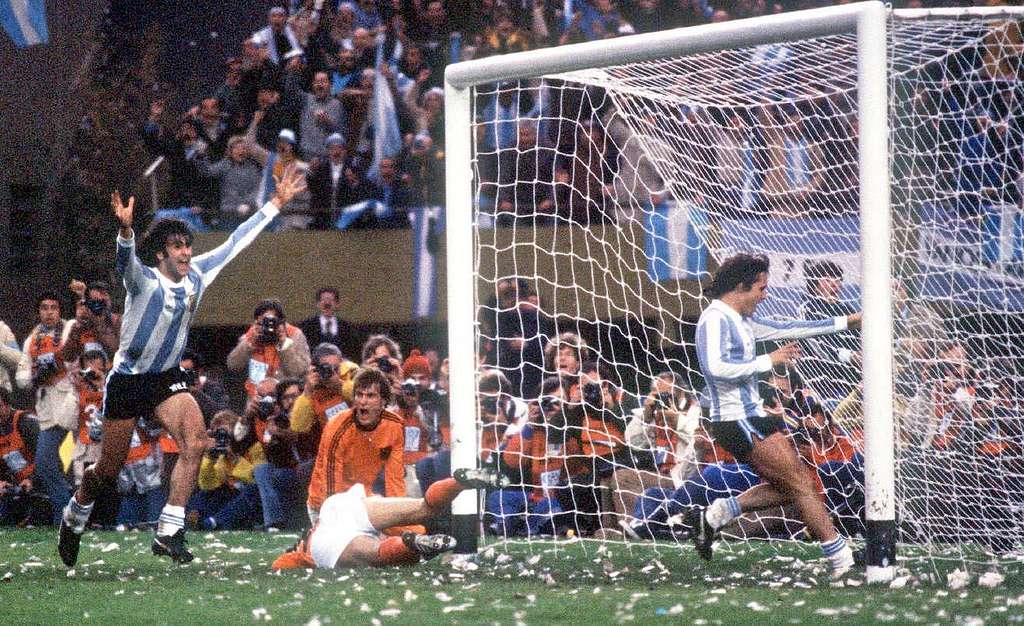
image source and credit : https://picryl.com/media/kempes-versus-holanda2-9422a6
The Political Climate
Argentina in the 1970s was a country torn apart by violence. Like many Latin American nations during this period, the country was caught in bloody conflicts between leftist movements, far-right groups, and government forces. In 1976, far-right General Jorge Videla led a military coup that seized control of Argentina, backed by the United States.
Videla’s reign was marked by brutality and what became known as the “Dirty War.” His repressive policies made Argentina an international pariah, while his disastrous economic decisions left the country struggling financially. The government was so desperate that they had to seek help from the World Bank to organize the World Cup, with additional support from the United States, who wanted their ally’s tournament to succeed as a way to improve Videla’s image with the Argentine people.
The situation became even more sinister when General Omar Actis, one of the World Cup organizers, was assassinated. He had been planning to speak publicly about the excessive spending on World Cup preparations that didn’t match Argentina’s economic reality.
Evening Matches and Timing Controversies
One of the first controversies involved Argentina playing their matches in the evening, after all other results were already known. This gave them a significant advantage in knowing exactly what they needed to do to advance.
The Peru Match: The Biggest Controversy
But the real scandal centered around Argentina’s match against Peru. Argentina needed to win by four goals to reach the final, and they did exactly that, winning 6-0 in a performance that raised eyebrows around the world.
Rumors swirled about secret agreements between the Argentine and Peruvian governments involving money and tons of grain shipments from Argentina to Peru. There were also allegations that Argentina agreed to house Peruvian political prisoners. These deals were supposedly arranged with the help of Henry Kissinger, a close friend of Videla (despite having left his official US government position), who allegedly entered the Peruvian players’ locker room with Videla and other generals to inform them of the agreement. While some Peruvian players denied this to Channel 4, others confirmed it.
The British press accused Argentina of unfreezing Peruvian bank accounts that had been previously frozen. Brazilian journalists claimed Peru’s goalkeeper, who was born in Argentina, deliberately underperformed. A Colombian drug trafficker even accused Peruvian players of taking bribes for non-political reasons, though the players denied all accusations.
Peruvian Senator Genaro Ledesma called on FIFA to investigate Argentina and strip them of their World Cup title. Meanwhile, Peru’s star player José Vásquez said the Argentine delegation visited their locker room to wish them good luck, though he was puzzled about being substituted at halftime when the score was only 2-0, especially since he was one of the team’s brightest stars.
Johan Cruyff’s Mysterious Absence
Dutch superstar Johan Cruyff announced he wouldn’t participate in the tournament but never explained why. For years, people assumed he was protesting against playing in a dictatorial country. However, 30 years later, in an interview with a Peruvian journalist, Cruyff revealed the reason was personal, not political—otherwise, he said, he wouldn’t have played in Spain under dictator Franco’s rule.
The Final: More Controversy
Even the final wasn’t free from controversy. Many observers noted that Italian referee Sergio Gonella was remarkably lenient with Argentine players. The match was delayed because Argentine players were late entering the field, seemingly to rile up the home crowd. They also refused to play until Dutch player René van de Kerkhof removed a plaster cast from his wrist—something he had worn throughout the entire tournament without any previous objections. The referee gave in to Argentina’s demands, and in response, the Dutch team boycotted the post-match celebration ceremony.
A Lasting Mystery
This post doesn’t confirm or deny any of these incidents, but rather presents the various controversies that continue to surround what many consider football’s most disputed World Cup. The 1978 tournament remains a fascinating and troubling chapter in football history, where sport and politics became dangerously intertwined.
Whether these allegations are true or not, they serve as a reminder of how major sporting events can be influenced by the political climate of their time, and why transparency in sports governance remains so important today.
Disclaimer
The author does not adopt or endorse any of the allegations, theories, or claims presented in this article. This post is intended solely for informational and educational purposes, presenting various documented controversies and allegations that have been raised by different sources over the years regarding the 1978 World Cup. The purpose is to discuss these historical issues and their impact on football history, not to assert their veracity. Readers are encouraged to form their own opinions based on the available evidence and sources.
Key Resources and Sources
Academic & Historical Analysis
- Harvard University ReVista: “Another Controversial World Cup to Remember: 45 years later” – https://revista.drclas.harvard.edu/another-controversial-world-cup-to-remember-45-years-later/
- HISTORY.com: “When Argentina Used World Cup Soccer to Whitewash Its Dirty War” – https://www.history.com/articles/world-cup-soccer-argentina-1978-dirty-war
- Taylor & Francis: “40 years after victory: disputing memories over the 1978 World Cup in Argentina” – https://www.tandfonline.com/doi/abs/10.1080/14660970.2020.1793625
Government Documents
- National Security Archive: “Henry Kissinger Visit to Argentina” (Declassified State Department Cable) – https://nsarchive.gwu.edu/document/21952-document-03-department-state-henry-kissinger
- Buenos Aires Herald: “The long shadow of Henry Kissinger in Argentina and Latin America” – https://buenosairesherald.com/politics/the-long-shadow-of-henry-kissinger-in-argentina-and-latin-america
Major Sports Journalism
- Yahoo Sports: “Argentina 6-0 Peru 1978: Match Fixing or Miracle?” – https://sports.yahoo.com/argentina-6-0-peru-1978-152300414.html
- Yahoo Sports: “Argentina’s 1978 World Cup win was fixed, former senator says” – https://sports.yahoo.com/ro-rogers_argentina_peru_fixing_scandal_world_cup_021012.html
- ESPN/CBC Sports: “1978 World Cup: A first title for Argentina” – https://www.cbc.ca/sports/soccer/1978-world-cup-a-first-title-for-argentina-1.816202
Primary Sources & Player Testimonies
- Channel 4 News: “Henry Kissinger and football’s longest unsolved riddle” – https://www.channel4.com/news/dr-henry-kissinger-and-footballs-longest-unsolved-riddle
- Irish Times: “Kidnapping attempt kept Cruyff away from 1978 World Cup” – https://www.irishtimes.com/sport/kidnapping-attempt-kept-cruyff-away-from-1978-world-cup-1.914111
- Football Oranje: “World Cup 1978: Kidnap, Conspiracies, and another Dutch final defeat” – https://www.football-oranje.com/world-cup-1978kidnapconspiraciesand-another-dutch-final-defeat/
Official FIFA & Tournament Documentation
- Wikipedia: “1978 FIFA World Cup” – https://en.wikipedia.org/wiki/1978_FIFA_World_Cup
- Wikipedia: “Argentina v Peru (1978 FIFA World Cup)” – https://en.wikipedia.org/wiki/Argentina_v_Peru_(1978_FIFA_World_Cup)
- Wikipedia: “1978 FIFA World Cup final” – https://en.wikipedia.org/wiki/1978_FIFA_World_Cup_final
- Wikipedia: “Johan Cruyff” – https://en.wikipedia.org/wiki/Johan_Cruyff
Additional Analysis
- Esquire UK: “Remembering Argentina 1978: The Dirtiest World Cup Of All Time” – https://www.esquire.com/uk/culture/a21454856/argentina-1978-world-cup/
- Al Jazeera: “World Cup 1978: Army interference, violent clashes and a boycott” – https://www.aljazeera.com/sports/2022/11/9/profile-fifa-world-cup-1978
Note: These sources include major news organizations, academic institutions, declassified government documents, and sports journalism outlets, providing multiple perspectives on the controversial events of the 1978 World Cup.
